 Future Performance Training
A healthy employee is a happy and productive employee, and that is a goal for every organisation.
Employees however have a duty to look out for the safety, well-being and happiness of the company's customers, and ensure they are satisfied. This in turn promotes the company's professional image and ultimate success, which in turn is beneficial to the employee.
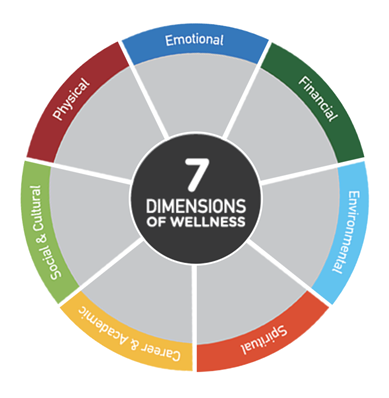

The company's success and image begins with the good personal hygiene, cleanliness and professionalism of the staff that work for them, and in particular the Front Line Staff and others dealing with the public.
Importance of Good Personal Hygiene
The importance of personal hygiene is a significant consideration. Maintaining personal hygiene is necessary for a lot of reasons; these can be personal, social, for health reasons, psychological or simply like a way of life.
Personal hygiene is recognized as behaviours which include wearing clean cloths, bathing, washing and combing one’s hair, as well as flossing and brushing teeth.
Professional Appearance
No organisation would like its employees to appear unhygienic and untidy. The employees who are unable to maintain their hygienic presence throw an undesirable self-image on their colleagues as well as the clients.
This insufficient hygiene practices in the form of unpleasant odours. Furthermore, negligence with personal hygiene practices brings about development of infections which affects his performance at the office.
Healthy Living Nutrition, Exercise, and Sleep
If your body is a mess, your mind will be a mess too, and all the coping techniques in the world won’t help you.
Nutrition
While most people find it hard to eat exactly what the food guide tells us to, try to aim for a balanced diet. Sodas, coffee, and French fries aren’t found in the guide for a reason! (We’re not saying that you can’t have a treat now and then – just remember that moderation is important.)
Try to limit yourself to two cups of coffee a day. If you find this hard, try drinking decaffeinated coffee or herbal tea. Avoid fast food when possible and try to eat lots of fruit and vegetables.
Experts also recommend we drink six to eight glasses of water a day, but remember that juice and herbal tea can be included in that. There are many types of flavoured water out there – just make sure you’re not choosing one that’s full of sugar. In general, make it a habit to read labels so that you can avoid foods that are high in carbohydrates and fat.
Exercise
Experts say we should try to exercise for at least 20 minutes three times a week. This doesn’t have to be heart-pounding cardio activity. Walking is a great form of exercise, for example, and it’s something that you can fit fairly easily into your routine. If your day is really busy, set the alarm a half hour earlier and exercise when there are fewer things to distract you. Or, go for a walk at lunch time. Doing some quick stretches every half an hour can be a good way to reduce tension and get your blood flowing, too.
Sleep
Once again, experts recommend that we get eight hours of sleep a night. However, everyone is different – some people feel that six hours is adequate, while others feel they need ten to 12 hours. Figure out what works for you and aim for that amount every night.
Just as important as the quantity of sleep is the quality of your sleep. Make sure your bedroom is quiet and comfortable. Try to prevent it from being too hot or cold when you go to bed – use a fan or add extra blankets. Going to sleep around the same time every night, and sleeping in your bed (not on the couch or in front of the TV) also helps your body establish a routine, making it easier for you to fall asleep and have a restful night.
Many people find that sleep medications are helpful, but people have also found that they can become addictive. Make sure you talk to your doctor before using medication.
We also recommend trying natural therapies, such as nature music, chamomile tea, and a relaxing routine.
Professionalism
Professionalism means that your conduct always has to remain above question - and has to fit in with the circumstances and situation.
Many business deals have been lost due to an unintentional lack of manners or etiquette. Ignorant, unintentional behaviour, causing people to feel disrespected or abused has lost organisations and business leaders a lot of money and respect.
You may never be given a second chance to find out what went wrong. You need to make it your business to know as much as possible about the client's and/or the organisation's culture and expectations.
This requires understanding and commitment to:
- Acting professionally always in the workplace and with clients
- Better business etiquette and manners
- Improving your image
- Minding your manners
- Improving your own skills and knowledge
- Acting more respectfully in the workplace and with clients
- Being more caring and compassionate
- Communicating with integrity
There is no doubt that clients and staff need - and indeed demand - well-behaved, emotionally mature individuals with whom to interact.
Most organisations, a small business being no exception, should demand professional behaviour at all times, but often do not offer any explanation of what that means.
We simply assume that everyone knows how to conduct themselves in every situation. In addition, many of us expect western manners and etiquette from all South Africans, leaving no room for error and totally disregarding African - and other - cultures.
Improved professionalism does not only ensure individual growth and development but creates more co-operation and respect, improved communication and higher performance.
A new, more professional mindset helps create loyalty which in turn influences the way business is conducted; customer service is delivered and as a result, the bottom line.
The most important thing to remember is to be courteous, considerate and thoughtful to everyone around you, regardless of the situation.
In this module, we will cover the various aspects of professional behaviours such as personal appearance and business etiquette.
We will also explore the very important topic of Customer Service.
Personal Appearance
Why do people spend large sums of money each year on beauty products, weight loss programs, makeup, new hairstyles and clothes?
Simply because we are judged by the way society has determined we should look. Physical appearance influences first impressions, job interviews, and consumer buying behaviour.
First impressions are lasting impressions. You sub-conscientiously judge someone you meet for the first time within a few seconds of meeting them. This judgement is generally based on their appearance.
Since your appearance conveys a number of messages, you need to be aware of what is considered appropriate and what will be most beneficial to your image in both work and social situations.
Being neat and organised plays an important role in two key areas:
- How we look
- What our work area looks like
How we look
Personal grooming has a big impact on your customers.
Picture a man who has not shaved for 3 days, has not combed his hair, has long, dirty fingernails and has not washed his hands!
Now imagine this person coming to serve you in your favourite restaurant!
- How would this make you feel about this person?
- How would this make you feel about the restaurant?
- Would you go back to the same restaurant?
Your customers expect you to look the part for the job you do.
The Do's and the Don’ts of Personal Appearance:
When we get ready for work we need to take the following aspects into consideration:
- Hair
- Clothing
- Jewellery
- Makeup
- Shoes
We will begin our discussion by looking at men.
Today’s society has evolved to the point where men no longer have to parade in top hats, waistcoats or ties. Instead, we are being taught to embrace our individual cultures. This does, however, not mean that we can come to work or meet clients wearing shorts and no shoes!
No, it simply means that being comfortable in your work environment is an important part of being productive. However, knowing the accepted or appropriate dress code for your organisation or your clients becomes an important part of ensuring and maintaining professionalism.
With this in mind, a few key aspects have been put in place to guide you in your preparation:
- Men are encouraged to wear neutral colours
- Try stick to wearing dark coloured pants with dark socks and matching shoes.
- For the office environment that is more casual, a smart pair of jeans with a button shirt or plain jersey is highly recommended.
- Wearing a tie and a jacket is sometimes reserved for those all important board meetings and more formal occasions.
- A clean-shaven face, tidy nails and well-kept hairstyle are important aspects to remember.
- Shining your shoes is advice that costs little but creates a huge impact.
As for jewellery, well men and women alike are discouraged to layer themselves in gold and diamonds. Regardless of popular belief “bling” is not "in", in the business environment.
Here are a few pointers to guide women in their journey towards creating that professional image:
Hair:
- This needs to be kept clean and tidy. Outrageous hair colour is discouraged unless you are the latest rock star.
- Hair needs to be kept out of your face in a style that is not distracting for either you or your customers.
Clothing:
- Women should also stick to neutral colours. Pants, long skirts or knee-length dresses or skirts portray a sense of professionalism when they are in dark colours.
- Tops need to be conservative and comfortable; no one wants to see your latest body piercing or tattoo.
- Tops should be loose-fitting and not too low cut.
- Women are discouraged to wear a lot of glitter and accessories during the day
- Women tend to be taken more seriously when they wear pants than when they wear a skirt or a dress. That choice however does lie with you and your work environment.
Jewellery:
- As with men, this should be kept to a minimum. There is nothing more distracting than a woman who jingles when she walks. Remember less is more.
- Piercings, be they earrings or a nose ring should be kept small and sophisticated. Any other type of piercing is discouraged in the work environment as they are distracting and sometimes not pleasing to the eye.
- If a metal detector goes off when you walk through it that is a sure sign that you have too many piercings and far too much jewellery!
Makeup:
- How much is too much and how much is too little? Well, there is no such thing as too little make-up. Remember make-up is there to enhance and highlight the natural beauty of a woman. Makeup should not be used to cover or replace. Soft neutral colours are once again encouraged.
- Colourfast lipstick is also something that should be considered or may be replaced with a light lip gloss that adds a small amount of sheen to the lips.
Shoes:
- These should be comfortable and look neat. Clean shoes do not only apply to men.
- Women need to make sure that the shoe fits perfectly; there is nothing more distracting than a pair of shoes that are far too big or for that matter far too small. Toenails should also be well kept, short and clean.
These are simply guidelines and are not necessarily set in stone. However, people are encouraged to find out what is acceptable in their work environment and make it work for them, not against them.
Your Work Area
The neatness of your work environment is especially important when customers have access to it. Customers will make decisions about you depending on how organised and competent you are by the way your desk or work area looks.
An untidy, disorganised work area creates the first impression of disorganisation. You would not want potential customers to think this of you, especially if we are meeting with them for the first time. They may well decide not to buy your product or service, based on their first impressions.
A neat, well-organised workstation, on the other hand, conveys a message of competence and ability. This is the impression you want to create with your customers.
The message you want to send out is one of: “look at me, look at my work area and know that I am the person you want to do business with!”
Professional Behaviour
As mentioned in the introduction, professionalism means that your conduct or behaviour has to remain above question at all times.
Professional behaviour is a key part of creating and maintain your overall professionalism in a business context
Within the business environment, it is generally accepted that professional behaviour is measured by the following criteria:
- Appearance
- Etiquette (manners)
- Punctuality
- Delivery
- Confidentiality
It doesn't matter how well you know your client; you have to make sure that your conduct is utterly professional.
Consider the following useful tips:
- Always make an appointment in advance, never arrive unannounced at your client's office or business.
- Make sure that you have all relevant documentation with you.
- You simply must be on time. Make every effort in this regard.
- Write down the name of the receptionist so that you can use it next time.
- Switch your cell phone off. You should not, under any circumstances, receive or make calls in the company of your client, unless it is for their benefit and with their approval.
- Greet your client by saying: “Good morning Mr. / Mrs………, I’m Joe from Potential Properties. It’s good to meet you.” Step forward and shake hands. If the client prefers you to use their first name, they will say so.
- Make sure that you have done what you promised to do or what is expected of you. Do not make excuses why something has not been done. If you can’t deliver what you have promised, make an alternative arrangement.
- Look and behave your best. Don't be loud or aggressive.
- Never lie to anyone about anything. Your image will be damaged and the client will have the right to take serious steps against you.
- Deal with your meeting professionally and do not overstay your welcome.
- If your client seems to be in a hurry, politely refuse any offer of a drink since this is likely to delay your departure, and thus delay your client.
- Do not wander through your client's organisation hoping to meet more people. This is unprofessional and will be viewed with suspicion.
- If you want to meet more people in your contact's organisation, ask them whether they would be willing to introduce you, or whether it would be in order for you to contact other people yourself.
- Do not go over your client's head.
- Diarise everything. If you do not, you may miss your next meeting, or forget to do certain tasks. It is totally unacceptable to say you forgot.
- Always thank your client for their time, and shake hands. Explain what you will be doing as a result of the meeting, so the client knows what to expect.
- Ask how they would prefer you to follow up –an e-mail, a visit or a phone call?
- Do not greet your client with a kiss, even if you know them well.
- Never ‘bad mouth’ a client or discuss confidential information with anyone.
Other important points to remember:
Smoking
o It is against the law in South Africa to smoke in any public place
o If you are a smoker, only smoke in a designated smoking area, whether this is in your own business, or in the client’s premises
o Never smoke in the client’s office, even if the client does
o Observe the clients’ company policy
o Implement a smoking policy in your business
Code of Good Conduct
- In order to ensure the professional behaviour of all of your staff members, it is advisable to compile a code of ethics and communicate this to all concerned.
- This will specify actions and behaviours that should be taken and will help you to assess the behaviour of your staff.
- It will also assist with guiding decision-making
- Ethical business practices are essential in your business and will influence your reputation and company success.
- Unethical business practices will destroy your business
- Try to find out if your clients have codes of good conduct and adhere to this in your dealings with them
Work Ethic
- It is essential to display a high standard of commitment and responsibility and act as a role model to both your staff and clients
- Appearing lazy or disinterested will not help you to get business!
Etiquette and Protocol
Definition – etiquette: Customary rules of social behaviour in civilized societies.
Business etiquette is made up of significantly more important things than knowing which fork to use at lunch with a client. People may feel that if you can’t be trusted not to embarrass yourself in business and social situations, you may lack the self-control necessary to be good at what you do. Etiquette is about presenting yourself with the kind of polish that shows you can be taken seriously. Etiquette is also about being comfortable around people and making them comfortable around you.
Basic knowledge and practice of etiquette is a valuable advantage, because in a lot of situations, a second chance may not be possible or practical. When in doubt stick to the basics.
The Basics of Protocol
The most important thing to remember is to be courteous and thoughtful to the people around you, regardless of the situation.
- Consider other peoples feelings, stick to your convictions as diplomatically as possible
- Address conflict as situation-related, rather than person-related
- Apologise when you step on toes
You can’t go too far wrong if you stick with the basics you learned as a child. This sounds simplistic, but the qualities we admire most when we see them in people in leadership positions, are the very traits we work so hard to engender in our children.
Avoid raising your voice, using harsh or derogatory language towards anyone, or interrupting. You may not get much “airtime” in meetings at first, but what you do say will be much more effective because it carries the weight of credibility and respectability.
It’s All About People
Talk and visit with people. Don’t differentiate by position or standing within the department or organisation. Show your appreciation for things that they do to help you be it at work or at home.
On social occasions use the circumstances of the event itself as an icebreaker. After introducing yourself, ask how they know the host or how they like the evening thus far. Talk a little about yourself, just enough to get people to open up about theirs and get to know you as a person.
It’s a good idea to remember what you can about people, and to be thoughtful. Send cards or letters for birthdays or congratulations on promotions or other events. Send flowers for engagements, weddings or in condolence for the death of a loved one or family member. People will remember your kindness, probably much longer than you will.
The current social and economic climate is one of rapid advancement through technology, which makes it very possible for an administrative assistant to become a manager.
This can make things awkward if you treat people differently depending on their “corporate standing”. If you show respect and courtesy to everyone, regardless of position or company, you avoid discomfort or damaging your chances in any unexpected turn of events.
Superiors
The only thing you owe your boss above and beyond what you owe your peers and subordinates is more information. Unobtrusively be sure he or she knows what you’re doing, is altered as early as possible to issues that may arise, and is aware of outcomes and milestones.
Never surprise your boss. It goes without saying that you should speak well of him/her within or outside the organisation.
International Business
This is written from a western point of view, it is important to note that etiquette in other cultures requires a bit of adaption and flexibility. If you’re travelling on business to a foreign destination, or have foreign visitors it is a good idea to learn as much as you can about the culture they are coming from and make appropriate allowances.
Things to consider are language, time zones, work schedules, holidays and food customs.
Generally speaking, as long as you are trying to be considerate and express an interest in learning you should be fine. If in doubt use the conservation formal side.
Meetings
If a subject is important enough to call a meeting, be considerate of the participants’ time and ensure that it is well prepared. Communicate beforehand the objective, the expected duration and the items to be discussed.
Often overlooked, be sure to thank meeting members for their time and participation and demonstrate how their contributions helped meet the objective of the meeting (usually shown in the minutes of the meeting).
Participants are frequently left wondering if they’ve been heard or if their attendance and contribution were noticed. Make sure that you distribute the minutes of the meeting to all attendees and absentees.
Never assign an action item to a person who is not present to negotiate it, unless you absolutely have to – in this case notify the person at your first possible chance to do so. Not in the minutes that the person hasn’t been notified at the time of the meeting.
Interruptions
Avoid interruptions if possible. Most management feels free to interrupt informal working sessions of subordinates, but need to realize that they may be interrupting a brainstorming session that might be critical for the organisation.
Always apologise if you must interrupt a conversation, meeting or someone’s concentration on a task. Quickly state the nature – of what you need and show consideration for the fact that you are interrupting valuable work or progress.
Guests, Consultants and New Employees
If you have a new employee, guest or consultant working at your department for a day, week or longer, be sure that the person has the resources and information that they need to do the job. This isn’t just courtesy it is good business practice.
Give a consultant or guest the same type of workspace as an employee at your organisation in a similar role.
A consultant who is there to do programming should have if at all possible, the same size cubicle, type of computer equipment, etc. as an employee programmer would have in your organisation. This prevents your employees from feeling looked down upon, and the consultant from feeling singled out or treated as second-rate.
Appreciation / Credit
Always pass along credit and compliments to everyone to everyone who made a contribution to the effort. Speak well of your co-workers and always point out their accomplishments to any interested party. Appearing to have taken the credit in superiors’ or customers’ eyes is the sure way to sabotage a relationship with a co-worker.
Business Table Manners
The fork goes on the left. The spoon and knife go on the right. Food items go on the left, so your bread plate is on the left. Drinks, including coffee cups, should be on the right. When sitting at a banquet table, you may begin eating when the two people on your left and right have been served. If you haven’t been served, but most of the people have been served you may encourage them to start eating. Reach only for items that are in front of you, ask that the other items be passed by a neighbour. Offer to the left, pass to the right, although once items start being passed along go with the flow.
Do’s and Don’ts when going out to lunch for business:
- When you order food, find out how long it will take. Don’t order food that takes longer to prepare than that of your other guests.
- Don’t cut your bread roll, break it open.
- Use your cutlery from the outside to the centre.
- When you’ve finished eating, place your knife and fork in the centre of your plate.
- Be aware of cultural differences. Some people prefer to eat with a tablespoon or their hands. At a business lunch, it is not permitted.
- Don’t order alcohol if the other people are during non-alcohol beverages.
- Don’t blow your nose at the table, excuse yourself and go to the bathroom.
- If some of your food has fallen on the floor or table, ignore it. If it is messy call a waiter to clean the area.
- Don’t drink too much alcohol
- Don’t try and dominate the conversation
- Don’t say “I am going to the toilet” say “Excuse me, I’ll be back shortly”.
- No inappropriate jokes.
- Don’t draw attention to yourself by eating too much
- Don’t complain about the food or be rude to the waiter
- Don’t speak on your cell phone – if you must – step away from the table – first, ask your guests to excuse you.
Introduction and Greetings
Although cultural differences exist, the following is acceptable:
- A younger person is introduced to an older person
- A non-official is introduced to an official person
- Staff is introduced to a client
- A man is introduced to a lady
Mention the name of the person of most importance or seniority first. Before an event, use your address book or your “people database” to refresh your memory about the people you are likely to meet.
If you forget someone’s name, you can sometimes “cover” by introducing the person you know first, this will sometimes get the unknown person to introduce themselves.
Code of Conduct (Work Ethics)
In a workplace all employees will be asked to follow a minimum set of guidelines:
The code of conduct
An employer can expect the following from an employee:
- To work for their pay, not to arrive late, leave early, take long lunch breaks etc.
- To abide by the organisation's rules and regulations as stipulated in their contract
- To be positive and motivated, to be honest without sulking and a negative attitude towards tasks and other colleagues
- ·To behave professionally at all times, to be honest, and use integrity. Not to gossip in the office and give out confidential information to anyone.
- Not to use the telephone or e-mails for private purposes and to respect the employer’s and other employees property.
Let’s discuss some basic etiquette regarding the following aspects.
Entering and leaving a room
- The person in the lead holds the door
- A same-gender – junior person holds the door for seniors – if the door is open, senior enters fist
- Person with an armful of files – other person leads
Elevator etiquette
- Person closest holds the door open
- First to get out – get in first and stand next to the buttons, or get in last.
- Escalator – man follows the woman – junior follows seniors / higher positions
Street etiquette
- Street side – all equal
- Man doesn’t have to offer his arm
- Man may offer his arm on staircases
- With two women – any side but not the middle
Meeting people
Receiving customers/guests at your workplace:
- Make a professional entrance (prepare a 30-second confident introduction on yourself)
- Get into the habit of using names at all times
- Specific visitors to your office – come out from behind your desk, shake hands, have a proper introduction, eye contact, etc.
- Unexpected visitors – be polite, but assertive
- Take the lead if you escort visitors – use hand directions – hold doors open – you are the host, offer a seat and refreshments (serve them first)
- First visits – escort to and from office to exists
- Don’t leave visitors to wander around
Shaking hands
- Handshakes says a lot about you
- Firm handshakes – show confidence
- Bone – crusher – dominating
- Weak a limp – lack of confidence
- Lean slightly forward – smile – eye contact
- Taking control – Giving control – Professional
- Don’t – double clasp – a hug or blow air kisses.
- ·Don’t be hesitant – extend your hand
Introducing people
- From seniority to junior
- From most important
- Introduce Visitors first then the rest
Being introduced
- Shake hands family – smile and make eye contact
- Introduce yourself – Name, company (30 seconds introduction)
- First impressions last forever
Remember names
- Remember the person name you are speaking to
- Use the person name you are talking to frequently
Telephone etiquette
- Pick up the phone within 3 – 4 rings
- Put a smile on your dial
- Introduction – “Good day, Company or department name, your name, how may I assist you”.
- Take notes – 5W and 1 H and responses
- Eliminate background noise / interference
- End call in a friendly conversation – invitation
- Don’t make personal calls from your company phone
Attending Meetings
- Promptness – no Africa Time
- Departmental meetings – no handshakes
- Company meetings – handshakes with host, seniors and influential people first
- Not necessary to rise each time for new entrants – if visitors enter, rise, introduce and shake hands
- Wait for invitations to remove clothes (jackets/tie)
- Leave meeting only if the chairperson/host indicates the end of the meeting (shake hands)
- You may arrange in advance to leave a meeting
Interacting during meetings
- Address the chairperson
- Don’t allow others to waste your time
- The 1-minute comments
- Respect other peoples points of view
- You have the Agenda – prepare
- Use listening skills – take notes
Social meetings (lunch/dinner)
- Planning a menu – variety (religious and beliefs)
- No alcoholic beverages during lunch – dinner?
- Conversation – not personal – business discussions after the meal
- Paying the bill – the one who did the inviting
- Tipping – usually, 10% if service was outstanding
Table manners
- The host may put a napkin on your lap – if not, put the napkin into belt or lap
- The host may make suggestions – host orders last
- Brake your bread
- Use cutlery outside in
- Scoop soup away from you
- Don’t eat with hands – not even if it is cultural/traditional
- Handle glasses
- Pits of fruit – from mouth to spoon to the edge of the plate
- Shellfish – eat with hand – bowl with lemon water to clean hands