 Future Performance Training
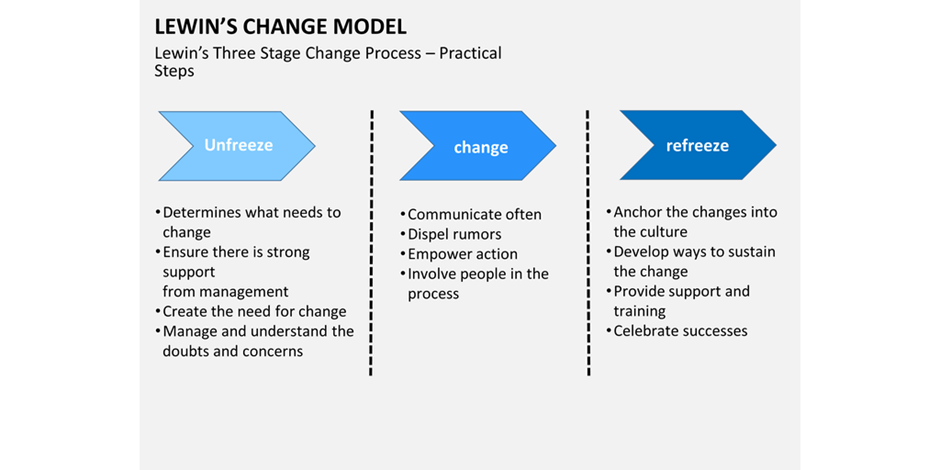
Lewin’s model is one of the most popular approaches, and it’s easy to see why. By splitting the change process into three stages you can break a large, unwieldy shift into bitesize chunks which account for both the processes and people in your company.
Lewin describes three stages of change management:
- Unfreeze
- Make changes
- Refreeze
Each stage is a little hefty and requires delving into detail, so I’ll split each into its own section below.
The Method
Unfreeze your process and perceptions
Upon realizing that your company needs to change, the first step is to
“unfreeze” your current process and take a look at how things are done. This
means analyzing every step and human interaction for potential improvements, no
matter how in-depth you have to go and how much you need to unearth.
By doing this you’re helping to eliminate any existing bias and commonly accepted mistakes. This gives you the perspective you need to change the cause of your problems, rather than just the symptoms.
Unfreezing also applies to your company’s perception of the upcoming change and their natural resistance to it. Forcing sudden change only breeds resentment, so you need to prepare your team for the new elements in order to let them take hold when deployed.
Everyone needs to know what’s wrong with the current process, why it needs to change, what changes are being suggested, and what benefits those changes will bring. This should help to convince them of the need to change and encourage them to stick to the new process.
Make your changes
Once you’ve prepared everyone it’s time to deploy your changes and guide the team as they adapt. Communication, support, and education are vital, as you want to limit any difficulties in the transition and address problems as soon as they arise.
As such, you first need to provide any extra education or training that your team will require. If you’re switching a piece of technology then they need to know how to use it, and if you’re adapting a new marketing policy they need to be told what to read to learn about it.
Next, you need to make sure that everyone has a place or person they can go to for support on the topic. This can be a regular meeting with their manager, a knowledge base they can refer to, or a mentor that’s guiding them through the process.
Finally, you should be communicating regularly with all members of your team (or at least getting their manager to do so). This is primarily to listen to feedback, as this will quickly highlight any problems you need to tackle.
Refreeze the new status quo
Once your changes have been deployed, measured, and tweaked according to feedback, you need to “refreeze” your new status quo. This is vital to any change management model – everything you’ve done is pointless if old habits resurface.
Regular reviews need to be carried out to check that the new methods are being followed. Rewards should also be given to those who consistently keep to the new method, and those who make a large effort to support and uphold the changes.
If you’ve listened to (and applied) feedback then this stage will be a little easier, since your employees will be more invested in the changes. They helped to shape them after all, so it’s natural that they would want them to succeed.
Beyond that, any documented processes need to be checked and updated, and all of these checks upheld until the changes become habit. There’s no set amount of time until this happens, but as long as you keep measuring and reinforcing the new state of things, eventually the habit will be set in stone.