 Future Performance Training
Burn wounds can be extremely painful, and, if not treated correctly, the major concern would be the resulting fluid loss and infection.
As a person is part of the environment that they are in, environmental conditions can have an effect on a person, depending on what the conditions are e.g temperature related conditions (heat or cold), and water related incidences.
In both the above cases, rapid, adequate treatment is vital, in order to prevent the condition of the person from worsening.
The outer / top layer (epidermis) of skin is
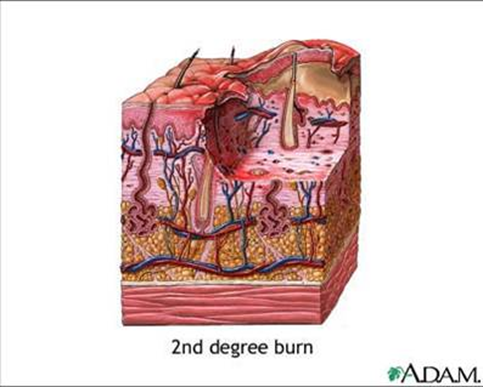
affected. Skin is red and dry, swollen and usually painful. Top layers are burned. Skin will be red and have blisters. These burns are usually painful. All the layers of the skin and underlying tissues
(e.g. fat, muscle, bones and nerves) are damaged / destroyed. The skin can appear pale, waxy and / or charred. This type of burn may be quite painful or relatively
painless due to nerve destruction. Thermal burns (Flame, Excessive Heat, Radiation or Sunburns)
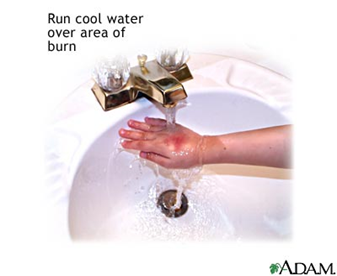
Spray the burnt area with cool water
1ST DEGREE / SUPERFICIAL


Note: Remove rings, jewellery in case of swelling. Do not force jewellery off a swollen finger.
An electrical burn wound may severely
damage underlying tissue. The patient may have two wounds from an electrical
burn (entry / exit site). Never go near a patient who has been electrically
burned unless you are sure that it is safe and that the power has been turned
off.

There are many chemicals that can cause a burn if they
come into contact with skin or mucous membranes. (Example: chlorine, battery
acid, DEET, etc.) Chemical burns require immediate care!

Smoke may irritate or damage the airway. Smoke can
cause irritation to the eyes. First priority is to:
Don’t for burns care:
- Don’t apply any home remedy or ointments
- Don’t apply ice directly on the skin
- Don’t break blisters
- Don’t remove pieces of clothing or any other item stuck to or in the burn
- Don’t give anything to eat or drink, unless he is fully conscious.
Do’s for burn care:
- Watch for signs and changes in breathing and consciousness
- Keep victim from getting chilled or overheated
- Seek medical attention, if appropriate.