 Future Performance Training
After examination and stabilisation, the patient must be transported. When deciding how to move a patient, the following should be considered:
- The nature of the patient's injuries and specific handling of these injuries, e.g.
o Spinal injuries
o Serious fractures.
- The patient's general condition
- The resources available
- Where the patient is located
o On a cliff ledge.
o At sea.
Besides using an ambulance or a stretcher, a patient may be moved by one of the following methods.

Two-hand seat: Two helpers are needed for this method. The two hand seat can only be used for conscious patients without spinal injuries.
Human crutch: This method is used when the patient finds it difficult to walk alone. The patient places his or her arm around the first aiders neck and he or she is supported while they walk.
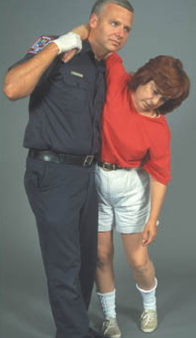
Fireman’s Carry: The fireman’s carry can only be used for patients without spinal injuries, fractures or dislocations.

Four-hand seat: Only conscious patients without spinal injuries, fractures or dislocations can be moved using this method. As with the two-hand seat, two helpers are needed.

NATO STRETCHER

Stokes Backet

SCOOP STRETCHER

SPINE BOARD

- Two poles and a sleeping bag
- Two poles and two jackets or shirts
- A blanket rolled up along the sides.