 Future Performance Training
Bleeding (haemorrhage) means that blood is escaping from the cardiovascular system from the arteries, veins and/ or capillaries.
It is estimated that the average adult’s body holds approximately 71ml/kg of blood. The rapid loss on more than 750 ml or more can lead to shock and death. A child losing more than 450 ml of blood is in danger. Severe Bleeding must be brought under control.
Arterial Bleeding
The opening of an artery results in the most serious type of bleeding. When blood is released from an artery, it is oxygen rich and will look bright red. The flow will often spew forth in rhythmic spurts that coincide with the hearts contractions. If a major artery is cut and not treated promptly, it is possible to bleed to death in as little as one minute.
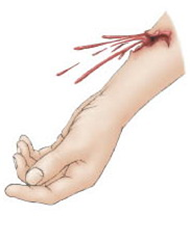
DANGER ! DANGER ! Follow bleeding control sequence and activate the EMRS immediately!
Capillary BleedingThe capillaries are the smallest and most numerous blood vessels in the body. When a cut or scrape opens capillaries, typically the bleeding will be slow. Your body should be able to control this bleeding through its own blood clotting ability. Rarely will you have a rapid or uncontrolled loss of blood in this situation.
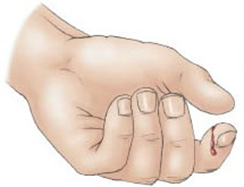
First Aid for Minor Wounds with Minimal Bleeding:
- Remove clothing covering the wound
- Clear the surface of the wound (wash all loose dirt away)
- Clean wound with water and soap and then apply antiseptic (clean from inside the wound outwards)
- Apply a clean dressing to prevent infection.
Venous Bleeding
This is usually the result of a deep cut that opens veins. This will release blood that its way back to the heart. The blood from this wound will be dark red. It flows steadily. If left untreated, a life-threatening condition may result. You must control this bleeding. If bleeding persists after you have provided bleeding control first aid, sutures will be needed. Transport to medical centre or call EMRS.


APPLYING A MATERIAL BANDAGE
|
The Bleeding Control Sequence |
||
|
1 |

|
Direct pressure At this time, a direct pressure bandage may be applied.
|
|
2 |
|
Elevate Do no further harm.
|

THE BLEEDING CONTROL SEQUENCE

Internal bleeding may not be visible. The signs vary depending on the nature, volume and cause of the bleeding.
Signs and Symptoms:
- Bleeding from one of the body’s orifices (nose, ear, mouth, rectum, and urethra)
- Bruise or contusion
- Signs and symptoms of shock
- Nausea and vomiting
- Painful, tender or hard spot on abdomen or chest
- Puncture or penetrating wounds
- Fractures.
First Aid Care:
- Care for shock
- Watch for vomiting
- Apply ice pack to injured area, place cloth between ice and skin
- Call EMRS!
An impaled object can be anything from a piece of glass, metal, wood, shrapnel, knife or even a fractured bone (open fracture) sticking out of a wound.
Do not remove the object!! Control bleeding as best as possible without disturbing the object. Stabilise the object with a ring or roller bandages. Restrict the patient’s movements.

FIGURE 24 A & B: STABILISATION OF AN IMPALED OBJECT, USING ROLLER BANDAGE.


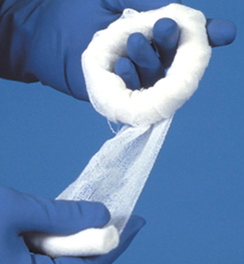
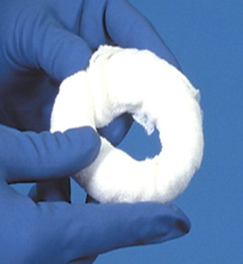
MAKING A RING BANDAGE
Scalp and Face Injuries
The head and face is rich in blood supply thus these injuries bleed profusely even though a major blood vessel may not have been severed. Follow Bleeding Control Sequence.

Amputation / Severed Body Part
Follow Bleeding Control Sequence. Do not scrub body part. Do not place part directly on ice. Wrap part in a sterile or clean cloth. Place part or cloth in a sealed plastic bag. Place bag containing part on a bed of ice. Do not bury in ice.
Control bleeding. Clean area with soap and water for at least 5 minutes. Cover the wound with a sterile dressing. Seek medical attention for any bites that break the skin. Any human or animal bites may cause infection. A tetanus immunization may be recommended.

An injury that breaks the skin can lead to infection. Common symptoms include wound area becoming hot, red, swollen and painful. Wound may discharge pus. Red streaks may develop near wound. Victim may become ill and feverish. Seek medical attention for persistent or severe infection. A tetanus immunisation can help the body fight tetanus bacterium.
Once the bandages have been placed the circulation below the bandages must be monitored to determine if the blood circulation has been affected. Common signs and symptoms would be the part distal to the bandage will feel cold; the patient will complain of feeling pins and needles in the part distal to the bandage and the limb will be pale or blue-grey.
The treatment is quite simple and that is to restore blood circulation by applying the bandage more loosely.
Eye injuries are generally not life threatening. They can, however, be severely detrimental to the patient in the long term.
Foreign Objects (penetrating or superficial)
The eye will appear
- Eye - watery and red.
- Scratchiness in the eye.
- Foreign object visible in the eye when the eyelid is pulled up or down. The eyelids are opened using the thumb and forefinger.
Treatment
Foreign Objects in the Eye (Non Penetrating)
- Explain the treatment to the patient before starting.
- Rinse with clean non-irritant liquid (water, milk etc.).
- If the object is seen use wet gauze or soft tissue paper remove it.
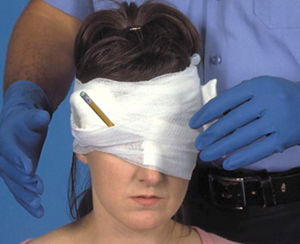
- Should the object not be easy to remove, cover both eyes with gauze swabs kept in place with plaster.

Penetrating Wounds of the Eye
- Should the object of penetration still be in place, do not remove or disturb!
- Protect the eye by placing a roller bandage or ring pad around the object.
- Place a paper cup or cone over the object to prevent it from being disturbed.
- Bandage other eye without applying any pressure to the eyeballs.
- Do not use any ointments or eye drops.
- SEEK MEDICAL ATTENTION!
Chemicals in the Eye
- Flush eye with water immediately for at least 15 – 20 minutes continuously.
- Roll Eye as much as possible during flushing to assist washing the chemical out.
- If only one eye is affected, rise contaminated eye downward away from other eye.

Cuts or blows to the Eye
- Patch both eyes. SEEK MEDICAL ATTENTION!
Ear injuries usually occur from pressure being put onto the tympanic membrane (ear drum) or from head injuries.
Signs and Symptoms
- Bleeding from the ear (s):
o Possible base of skull fracture, if accompanied with a head injury and/ or headaches. The blood can be combined with a straw coloured watery fluid (cerebro-spinal fluid - CSF) that trickles from the ear.
o Ruptured tympanic membrane - a small quantity of blood flows from the ear.
- Deafness
- Pain - throbbing
- Loss of balance.

Treatment
- Ruptured ear drum (tympanic membrane) - Tilt the head to the injured side for drainage.
- Suspected base of skull fracture - Treatment as for Neck-Spine Injuries
- Cover the ear with a sterile dressing (Do not plug the ear).
- Should the pinna (external ear) be damaged it should be placed in the correct position and kept in place by a bandage.
Nasal injuries and bleeding are caused by various factors, namely: fractures, blows to the face, high blood pressure, blood diseases, high temperatures and climate.

Signs and Symptoms
- Bleeding from the nose:
o Ruptured blood vessel - bright red blood.
o Possible base of skull fracture, if accompanied with a head injury and/ or headaches. The blood can be combined with a straw coloured watery fluid (cerebro spinal fluid) that tickles from the ear.
- Discolouration around eyes (Racoon eyes/ Peri-orbital Bleeding).
Treatment
- Ruptured blood vessel:
o Tilt the head forward and pinch the soft part of the nose below the nasal after 30 minutes seek medical aid.
o An ice pack can be placed on the bridge of the nose and on back of neck.
o Advise the patient not to cough or blow his/her nose.
- Suspected base of skull fracture. Do not stop the bleeding. Use gauze swabs only to absorb the blood. - Treatment as for Neck-Spine Injuries

Open Chest Wounds
Open chest wound without a penetrating object - Cover the wound to prevent outside air from getting into the chest cavity. You can use plastic to place over the opening. Leave one corner untapped as this will prevent air from being taped in the chest but allow any trapped air to escape from the chest.


Covering An Open Chest Wound
Closed Chest Wounds Closed chest wound caused by a
blow to the chest area - Have patient hold a pillow
against injured area. Watch for signs of shock because there may be internal
bleeding. SEEK MEDICAL ATTENTION!
Always suspect internal damage and bleeding. Call EMRS
and provide care for shock. Never touch protruding organs. Always cover the
organs with a wet, sterile dressing. Use a bandage to keep the dressing in
place, without applying pressure to the protruding organs. If available cover
the dressing with plastic and secure all four sides with plaster. Place the
casualty in the most comfortable position (i.e. On his/her back, legs bent.)
And be prepared for vomiting.

Covering Protruding Organs